Maltaş
Koordinaten: 39° 2′ 35″ N, 30° 31′ 6″ O


Die phrygische Kultfassade Maltaş (auch Mal Taş) aus dem achten Jahrhundert vor Christus liegt im Landkreis İhsaniye der zentraltürkischen Provinz Afyonkarahisar, etwa 40 km nördlich der Provinzhauptstadt Afyon.
Sie ist vergleichbar mit dem als Midas-Grab bezeichneten Monument in Midasstadt und dem freistehenden Arslankaya. Diese Fassaden waren bis zu 17 Meter hoch, wurden oben von einem Giebel abgeschlossen und hatten unten eine zentrale Nische mit einem Kultbild der Kybele. Die 9 m breite Fassade von Maltaş ist bis zum Giebel vom Erdreich bedeckt, etwa 3,5 bis 4 m sind noch sichtbar. Die Front und das Giebelfeld sind von einem Rautenband eingerahmt, auf der Fassade ist ein geometrisches Muster erkennbar. An der linken Seite ist eine Inschrift in phrygischer Schrift zu sehen. Bei Ausgrabungen in den 1930er-Jahren kamen eine Nische und weitere Inschriften zum Vorschein.
Wenige hundert Meter entfernt liegen die beiden Felskammergräber Aslantaş und Yilantaş.
-
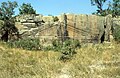 Versunkene Fassade
 -
 Phrygische Inschrift


Literatur
- Emilie Haspels: The Highlands of Phrygia. Sites and monuments. Princeton University Press, Princeton 1971, ISBN 0-691-03863-5, S. 85–96. 100–101. 103–104. 293–294.
- Elke und Hans-Dieter Kaspar: Phrygien – ein sagenumwobenes Königreich in Anatolien, Hausen 1990, ISBN 3-925696-07-5
- Susanne Berndt-Ersöz: Phrygian rock-cut shrines. Structure, function, and cult practice. Brill, Leiden 2006, ISBN 978-90-04-15242-7, S. 227–228 Nr. 24.
- Wolfgang Dorn: Türkei Zentralanatolien: Zwischen Phrygien, Ankara und Kappadokien. DuMont, Köln 2006, ISBN 9783770166169, S. 175.
Weblinks
- Phrygian Monuments - Maltaş (englisch)
Content Disclaimer
Informasi ini disarikan dari Wikipedia dan disajikan kembali untuk tujuan edukasi. Konten tersedia di bawah lisensi CC BY-SA 3.0. Kami tidak bertanggung jawab atas ketidakakuratan data yang bersumber dari kontribusi publik tersebut.
- The information displayed on this website is sourced in part or in whole from Wikipedia and has been adapted for the purpose of restating it. We strive to provide accurate and relevant information, however:
- There is no guarantee of absolute accuracy. Wikipedia is an open, collaborative project that can be edited by anyone, so information is subject to change.
- It is not intended to constitute professional advice. The content displayed is for informational and educational purposes only. For important decisions (e.g., medical, legal, or financial), please consult a professional.
- Content copyright. Wikipedia is licensed under the Creative Commons Attribution-ShareAlike License (CC BY-SA). This means that content may be reused with appropriate attribution and shared under a similar license.
- Responsible use. Any risk arising from the use of information from this website is entirely the responsibility of the user.