Capul Island
Capul Island
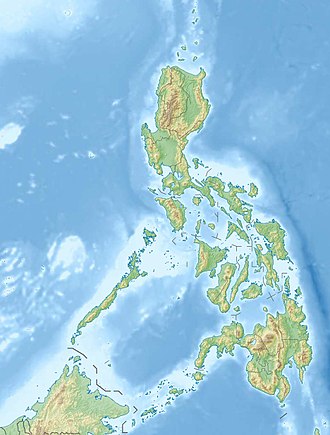
| Capul
| ||
|---|---|---|
| Gewässer | Samar-See | |
| Inselgruppe | Visayas | |
| Geographische Lage | 12° 26′ N, 124° 10′ O | |
| ||
| Fläche | 35,56 | |
| Einwohner | 11.287 (2007[1]) | |
| Hauptort | Capul | |


Capul ist der Name einer Insel in der Provinz Northern Samar auf den Philippinen. Sie liegt etwa 28 km vor der Nordwestküste der Insel Samar, an Übergang von der Samar-See in die San-Bernardino-Straße. Die Insel hat eine Fläche von circa 35,56 km² und wird von der gleichnamigen Stadtgemeinde Capul verwaltet.
Capul hat eine langgestreckte elliptische Form mit Länge von 14 km und eine Breite von 5 km. Der Pflanzenwuchs der Insel besteht teilweise aus dichter, tropischer Vegetation, teilweise aber auch aus intensiv landwirtschaftlich genutzten Flächen. Eine touristische Infrastruktur existiert auf der Insel nicht. Im nördlichen Teil der Insel steht ein Leuchtturm, der 1904 in Betrieb genommen wurde.
Die Insel Dalupiri liegt in etwa 18 km östlich und die Naranjo-Inseln in 23 km Entfernung westlich der Insel. Die Insel kann über den Hafen von San Isidro erreicht werden.
Einer Überlieferung zufolge sollen die ersten Siedler der Insel von Java kommend unter der Führung des Königs Abak gestanden haben. Die heutigen Bewohner sprechen immer noch eine andere Sprache als die Bewohner von Samar, diese wird als Inabaknon oder Abak-non bezeichnet. Im 18. Jahrhundert wurde die spanische Festung Fuerza de Capul fertiggestellt.
Siehe auch
Weblinks
Einzelnachweise
- ↑ PSGC: NSCB Active Stats – Municipality: Capul ( vom 14. November 2012 im Internet Archive)
Content Disclaimer
Informasi ini disarikan dari Wikipedia dan disajikan kembali untuk tujuan edukasi. Konten tersedia di bawah lisensi CC BY-SA 3.0. Kami tidak bertanggung jawab atas ketidakakuratan data yang bersumber dari kontribusi publik tersebut.
- The information displayed on this website is sourced in part or in whole from Wikipedia and has been adapted for the purpose of restating it. We strive to provide accurate and relevant information, however:
- There is no guarantee of absolute accuracy. Wikipedia is an open, collaborative project that can be edited by anyone, so information is subject to change.
- It is not intended to constitute professional advice. The content displayed is for informational and educational purposes only. For important decisions (e.g., medical, legal, or financial), please consult a professional.
- Content copyright. Wikipedia is licensed under the Creative Commons Attribution-ShareAlike License (CC BY-SA). This means that content may be reused with appropriate attribution and shared under a similar license.
- Responsible use. Any risk arising from the use of information from this website is entirely the responsibility of the user.